
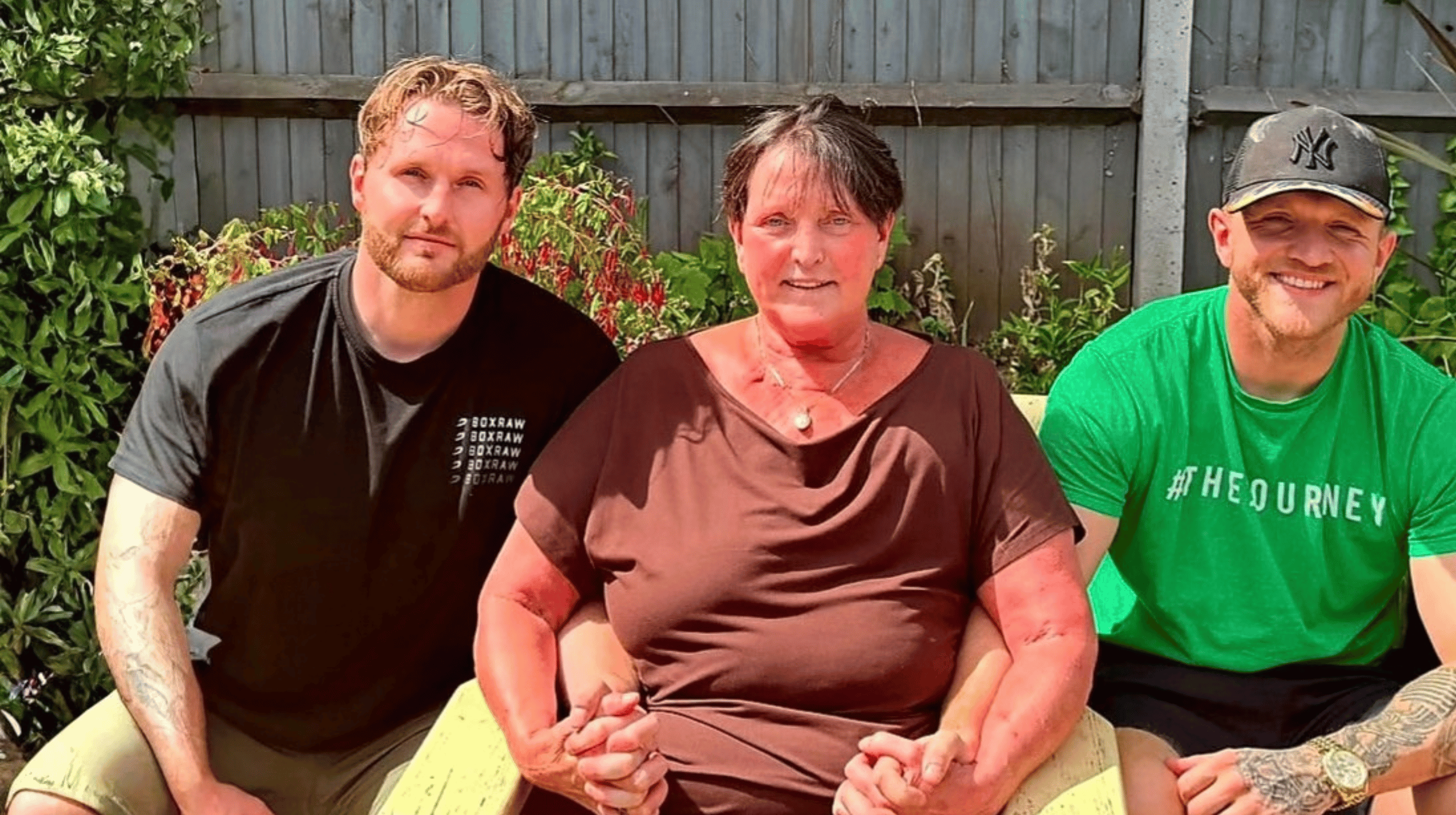
Living with breast cancer that has spread to her bones, Amanda Groves from South Oxhey was struggling with severe pain and declining mobility. Living alone, even taking medication was becoming difficult and trips to the supermarket were unbearable.
When Amanda’s palliative care team suggested a stay at the Peace Hospice Inpatient Unit, she was terrified.
She thought: ‘Is this it? Will I ever come out again?’
Like many people, she believed a hospice was a dark, gloomy place you entered at the end of life. What she discovered was something entirely different.
Finding hope through hospice care
During her second stay at the Peace Hospice Inpatient Unit, in June 2026, Amanda told us:
“I’m a very strong-minded and independent person so when my palliative care team suggested I should go to a hospice, I really didn’t want to. I hadn’t known anybody else who had been cared for at a hospice so my perception was similar to a lot of people – that it would be a dark, depressing place for people at the end of life.
“My palliative care nurse arranged for me to speak to someone from Peace Hospice and they explained how they could help me and why I’d be better off staying as an inpatient. So I agreed.
“When I arrived, it was nothing like I expected. I was given a lovely private room with a door on to the beautiful gardens. The staff were so helpful and answered any questions I had. So I sat on my bed that first day and thought ‘I’m here for a reason. Let’s make this work’.
“That first stay was about a month long. I was mostly here for pain management because the pain in my shoulder and back was so bad.
“During that time the care was incredible. Everything I needed was possible – nothing was ever a problem. The staff were all so kind. They just have time for everybody.
“After a month I practically skipped out of there. I felt so much better. I was strong enough to go home and I even made it to visit my mum in Essex.”
“After a month I practically skipped out of there.”
Following her discharge from the Inpatient Unit, Amanda was supported at home by a combination of Hospice at Home nurses and carers.
After a few weeks, she started to notice that things were getting worse again. Amanda says:
“I was in a lot of pain again. It was hard for me to get around the house and just climbing the stairs felt like climbing Everest. I said to my mum ‘something’s not right’ and I went back to the hospital. They did some scans and found that I had breaks and fractures on my spine and pelvis. I hadn’t even ‘done’ anything – like falling over – they were just caused by the cancer in my bones making them so brittle and fragile.
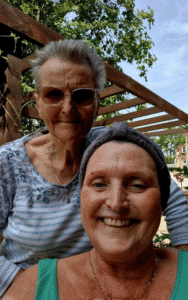
“I knew I wanted to go back to the hospice and as soon as a bed was available, I was transferred from the hospital back to the Peace Hospice Inpatient Unit. By this time the pain from the breaks and fractures was so bad that I couldn’t walk. I arrived in a wheelchair and I couldn’t believe that I had gone from managing at home to being unable to walk in such a short space of time.
“When I was admitted to the Peace Hospice Inpatient Unit I didn’t think I would ever walk again. That was a very dark time for me. I had so many questions like ‘what am I going to do? Will I ever get home? Will I be able to look after myself again?’.
“I knew it was serious and I had to do exactly what the team told me to do. The care at Peace Hospice had done wonders for me just a few months before so I knew that if they told me to do something, I needed to do it.
“When I was admitted to the Peace Hospice Inpatient Unit I didn’t think I would ever walk again.”
“I was put on total bed rest and the team worked on changing my medication to get the pain under control. They couldn’t guarantee whether I would ever walk again but I knew they were doing everything they could to give me the best chance.
“After a period of total bed rest I started to work with the physiotherapist. They would come to my room either every day or every other day. We started with exercises in my bed. Then, three weeks after I was admitted, I got up and did my first six steps around the bed. I was absolutely made up! My mum was visiting and she got to see it as well. It was a very emotional moment.
“After that I just thought ‘I’m not going to let this beat me. I will walk again’. The next day I did 13 steps. And we gradually built it up from there, to the point that I can now walk around with my walking frame.
“I didn’t think it would happen. I never thought I would walk again, truthfully. But I have. And it’s all down to the team in the Inpatient Unit. The care, the way they’ve looked after me, the medication and the physiotherapy have all combined to get me to where I am.”
Holistic care
Amanda’s two stays at the Peace Hospice Inpatient Unit haven’t just been about managing her symptoms. The team has offered support for every part of Amanda’s life – from her physical health to her emotional wellbeing and practical needs. She has been supported by doctors, nurses, healthcare assistants, physiotherapists, occupational therapists and a palliative social work team.
Amanda says:
“The social worker has helped me with a lot of practical things, like the paperwork side of things. Before my stays here I hadn’t got an Advance Care Plan and I hadn’t even thought about things like wills and power of attorney. That side of things is scary. So it’s been really helpful having her here to help me make sense of things.
“I’ve made an Advance Care Plan and my children and mum have copies of it. We’ve even changed it over time. This process got me thinking about my future care in a way I never had done before. It has given me time and space to make decisions about things in advance, so I feel more in control.”
For Amanda, the ultimate goal is to be well enough to return home to live independently. In order to make that happen she has been working with the team at Peace Hospice to prepare both physically and practically. She says:
“I live in a house with stairs and that has always been at the back of my mind – how will I be able to get home if I can’t walk. That has been a big motivation for me in getting back on my feet. The stairs are still a problem, though. I’ve talked to the team about it and they explained options like getting a bed downstairs. But that’s not something I want to do. So they’ve been great at thinking about other options. We’ve talked about things like renting a stair lift and the occupational therapist has even been to my house to assess it and make suggestions for practical ways we can make it work. I know I will need a hospital bed as there’s no way I could get comfortable on a normal bed. But instead of having it downstairs, they’ve talked to me about getting that in my upstairs bedroom. I’m grateful that the team really listens to what’s important to me and they’re working with me to try and find solutions.”
Unexpected experiences
During her second stay at the Peace Hospice Inpatient Unit, Amanda decided she wanted to get a tattoo. So, unable to get to a tattoo parlour, she organised for a tattoo artist to come to her! Amanda says:
“I wanted to get a tattoo of my sons’ fingerprints, in the shape of a heart. I knew I couldn’t get somewhere to do it, so I organised for the tattoo artist to come to me! I had a heart shaped tattoo made up of my two sons’ fingerprints on my shoulder. My youngest son, Jack, also had a tattoo of my fingerprint on his wrist.
“The nurses said ‘we’ve never had this in here before!’. But that’s me – always breaking down barriers and doing things my own way. I can just be myself here, and they’ll help me do whatever I need to, to feel like me.”
“I wanted to get a tattoo of my sons’ fingerprints, in the shape of a heart…”
Overall care
Speaking about her overall experience of the care she is receiving at the Peace Hospice Inpatient Unit, Amanda said:
“The care I receive here is top class. The staff are lovely. They explain everything to me and they don’t beat about the bush. They ask ‘what do you want to know’ and then they tell you – honestly and with compassion.
“At first my sons couldn’t believe that I agreed to come in here. I’ve always been so independent and strong-minded. But because of that, they know that I wouldn’t stay unless I was happy. They can see what a difference it has made in me. They both say ‘we can’t remember when we last saw you this well and happy’. They’re both very comfortable here as well. They chat to the staff and they know that people are here for them as well as me. If they want to have a chat with someone about how they’re feeling, or they have questions, they know they can speak to the doctors, the nurses, the social worker or anybody else here.”
Feeling at Peace
Amanda says: “Every few days during my stay, I fill in a questionnaire for the staff to keep an eye on how I’m doing. It asks how I’m feeling, physically and emotionally. There’s a question on there that asks, ‘are you at peace?’. When I first saw that I thought ‘what kind of a question is that? What do they mean?’. And it doesn’t make sense. Until you’ve been here for a little while.
“I remember one day I was sitting in the garden and this overwhelming sense of peace came over me. And I thought: ‘that’s it. That’s the question’. So now I can answer it properly and say ‘yes, I feel at peace’. It is the most lovely feeling. I’m just here and I’m safe. I feel so safe here. And so incredibly lucky to have this opportunity. I just couldn’t think of anywhere else that I’d want to be while I’m going through this.”
Fundraising
After seeing the care his mum has received during her stays at the Peace Hospice Inpatient Unit, Amanda’s oldest son, Luke, has decided to organise a boxing night to raise money for Rennie Grove Peace. Amanda says:
“When Luke came in here and saw what the place is like and how good the care is, he couldn’t believe that so little of it is funded by the government and that everything relies so heavily on fundraising. That didn’t sit right with him. So after seeing what a difference the care has made to me, he decided to organise a fundraising event.
“Luke is a boxer and he trains boxers for a living. So a boxing night just felt like the right thing to do. He’s going to host it at the Colosseum, right next door to the Peace Hospice building. He wants to raise as much money as he can for Rennie Grove Peace but he also wants to raise awareness. You don’t know about this place, or how good it is, until you experience it or see someone you love being cared for here. He wants more local people to know how lucky we all are to have this available to us, and to encourage everybody in the area to support it.
“I’m so proud of him for organising this. With Luke if he says he’s going to do something, he’ll do it. So I know he’s going to organise an amazing event.”